Четвертая стадия (близкая установка) The Fourth Stage (Close Placement)
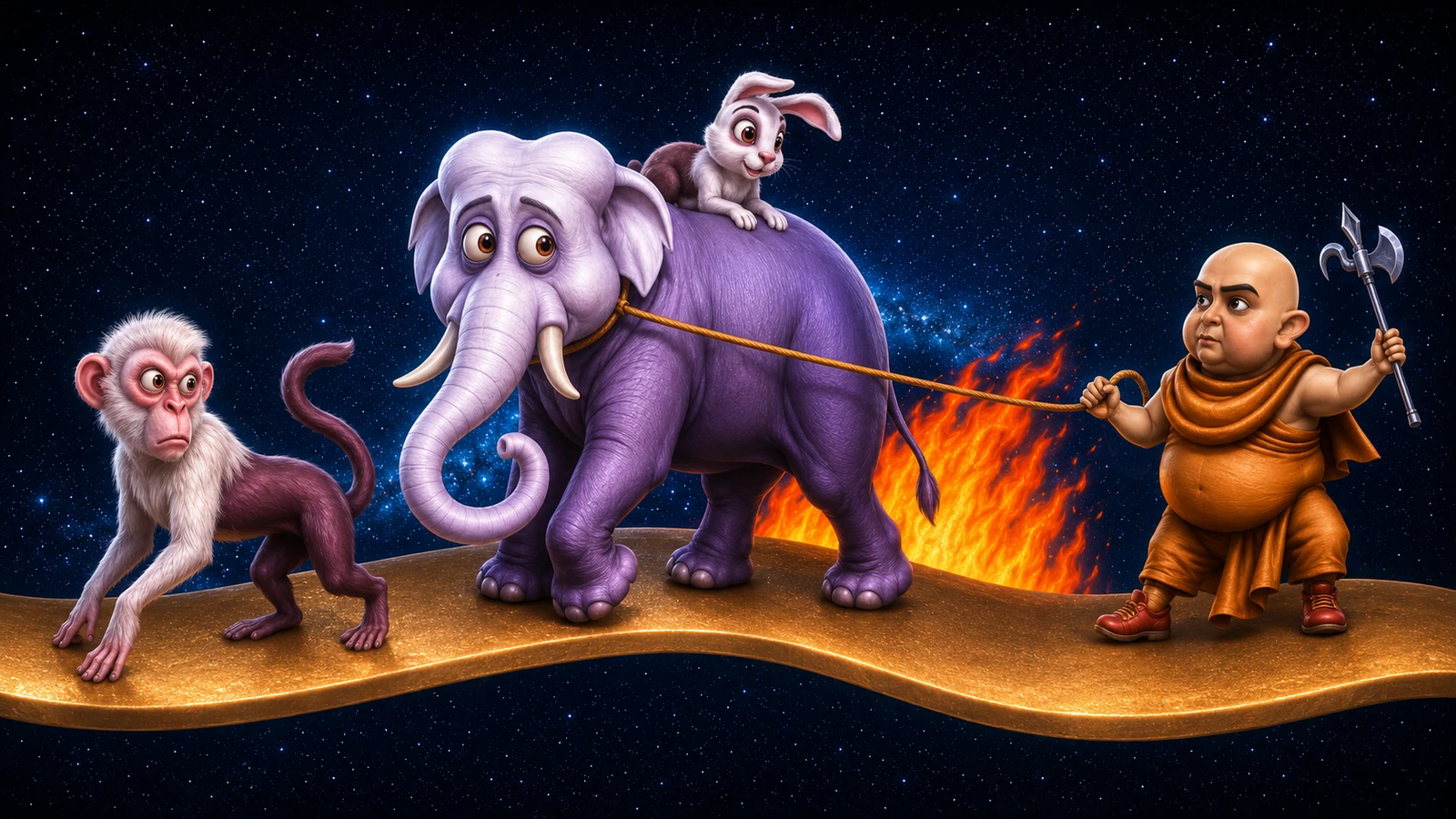
Животные посветлели еще больше, расстояние между монахом и слоном сокращено (поэтому стадия называется близкая установка), значит объект медитации больше не уходит, а присутствует постоянно (грубых отвлечений нет), но внимание находится на объекте не полностью, иногда оно частично отвлекается на другие мысли — это называется тонкой возбужденностью. Сначала концентрация ясная, потом наступает усталость, из-за чего ясность и насыщенность уходят, внимание частично перераспределяется на другие мысли, но практик сразу это замечает.
Некоторые практики на данной стадии, видя, что объект концентрации не уходит, начинают думать, что достигли девятой стадии шаматхи. Это очень опасная ошибка. Помните, что невозможно перескочить с третьей стадии на девятую, да и пройти с третьей на четвертую очень сложно, а с четвертой на пятую — еще сложнее, все это требует длительной регулярной практики.
Белая обезьяна на дереве собирает белые плоды, символизирующие благие поступки, которые практик совершает благодаря тому, что его ум очистился и стал более благостным. Хотя такие действия в социуме следует поощрять, они тоже препятствуют практике шаматхи. Поэтому дерево черное и стоит на обочине.
К концу четвертой стадии в полной мере развивается внимательность, а для перехода к пятой стадии надо развивать бдительность. С помощью бдительности можно распознать тонкие отвлечения и устранить их. Благодаря активной бдительности достигается пятая стадия.
The animals have become even lighter, and the distance between the monk and the elephant has shortened (which is why this stage is called close placement). This means that the object of meditation no longer disappears but remains continuously present (there are no gross distractions). However, attention is not fully fixed on the object and is sometimes partially diverted to other thoughts — this is called subtle agitation. At first, concentration is clear, but then fatigue sets in, causing clarity and vividness to fade. Attention becomes partially redistributed towards other thoughts, but the practitioner notices this immediately.
Some practitioners at this stage, seeing that the object of concentration no longer disappears, begin to think that they have reached the ninth stage of shamatha. This is a very dangerous mistake. Remember that it is impossible to jump from the third stage to the ninth. Even progressing from the third stage to the fourth is very difficult, and progressing from the fourth to the fifth is even more difficult. All of this requires prolonged and regular practice.
The white monkey in the tree is gathering white fruit, symbolising the virtuous actions that the practitioner performs because their mind has become purified and more wholesome. Although such actions should be encouraged in society, they also hinder the practice of shamatha. This is why the tree is black and stands by the side of the path.
By the end of the fourth stage, mindfulness is fully developed, while vigilance must be developed in order to progress to the fifth stage. Vigilance makes it possible to recognise subtle distractions and eliminate them. The fifth stage is attained through active vigilance.