Третья стадия (возвращение ума) The Third Stage (Returning the Mind)
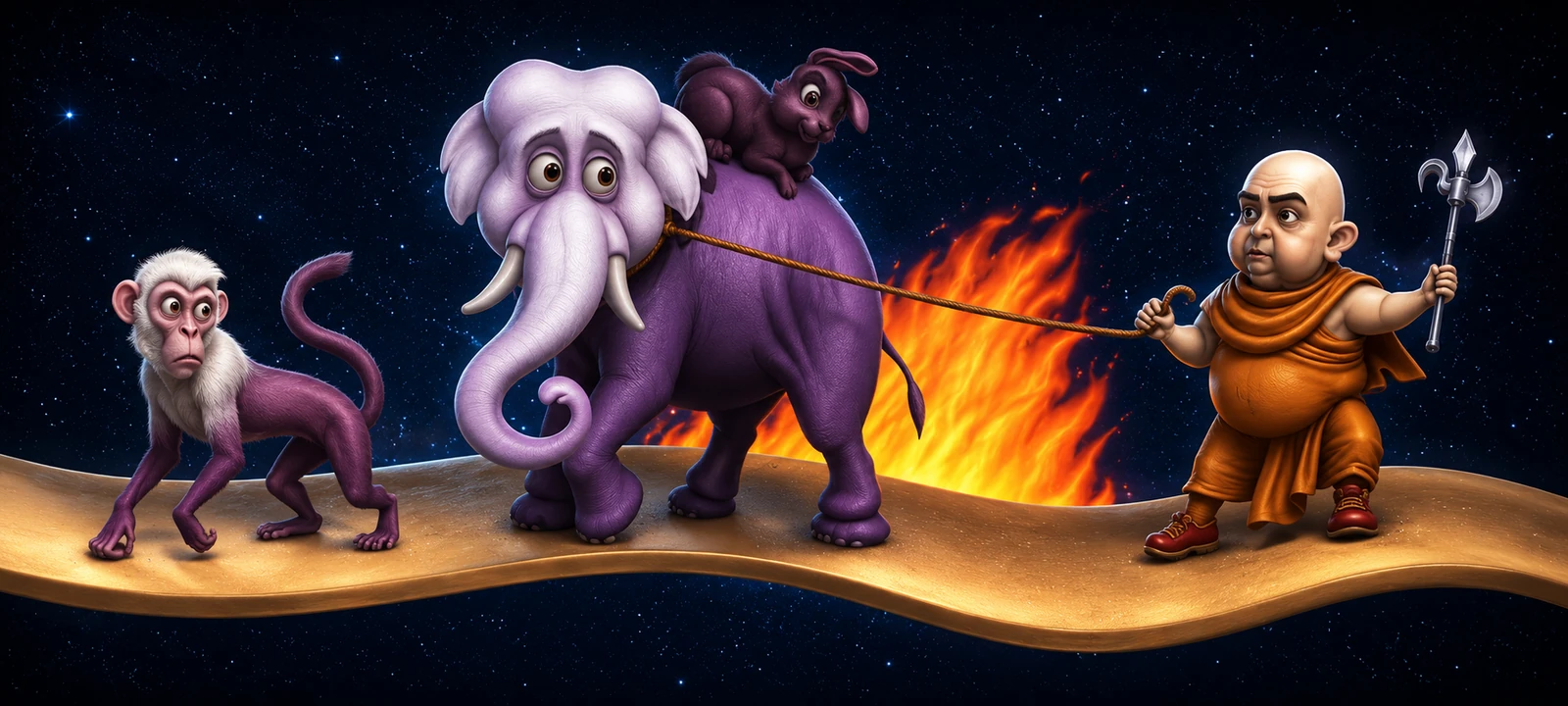
Монах прошел третий изгиб пути (силу бдительности), накинул лассо памятования на слона ума и животные оглядываются, значит практик сразу замечает отвлечения и возвращает ум к объекту (появилась осознанность), поэтому данный этап называется стадией возвращения (объект уходит, но тут же возвращается). Теперь практик может удерживать ум на объекте 4-5 минут, хотя все еще присутствуют грубые отвлечения.
Смешны разговоры о практике осознанности в повседневности от тех, кто не достиг данной стадии сосредоточения. В повседневности осознанность просто поддерживается, развивается же она с помощью практики концентрации, и привносится в повседневность из этой же практики. Фактически, способность концентрироваться отличается от способности поддерживать осознанность только тем, что концентрация приводит к блаженству, а осознанность — нет. Но без развития способности концентрироваться не может быть и осознанности в повседневности. Другими словами осознанность появляется только когда способность концентрироваться наработана в достаточной мере. А на определенном этапе данного процесса начинаются и осознанные сновидения.
Кроме того на слоне появился кролик, символизирующий тонкую притупленность. Это и есть то самое невежество, которое сложно заметить и отличить от благости (притупленность легко спутать с умиротворенностью). На самом деле тонкая притупленность была и на предыдущих стадиях, просто она не замечалась, теперь практик развил достаточно осознанности, чтобы распознавать ее и применять противоядие.
Грубая притупленность проявляется как неясное видение объекта медитации (словно в дымке, расплывается, детали не видны). Тонкая притупленность проявляется в том, что объект медитации вроде ясно виден, но ему не хватает яркости (ясность есть, но ее недостаточно). На первых двух стадиях ясность объекта медитации неважна, на третьей стадии тонкая притупленность, при которой объект видится не ясно и без деталей, является помехой. Теперь следует стараться увидеть объект как можно ярче.
The monk has passed the third bend in the path (the power of vigilance), cast the lasso of mindfulness over the elephant of the mind, and the animals are looking back. This means that the practitioner immediately notices distractions and returns the mind to the object (awareness has arisen), which is why this stage is called the stage of returning the mind (the object is lost but immediately regained). The practitioner can now keep the mind on the object for 4-5 minutes, although gross distractions are still present.
Talk of practising awareness in everyday life by those who have not reached this stage of concentration is ridiculous. In everyday life, awareness is merely maintained; it is developed through the practice of concentration and brought into everyday life from that same practice. In fact, the ability to concentrate differs from the ability to maintain awareness only in that concentration leads to bliss, while awareness does not. However, without developing the ability to concentrate, there can be no awareness in everyday life. In other words, awareness appears only when the ability to concentrate has been developed sufficiently. At a certain stage of this process, lucid dreams also begin.
In addition, a rabbit has appeared on the elephant, symbolising subtle dullness. This is the very ignorance that is difficult to notice and distinguish from goodness (dullness can easily be mistaken for tranquillity). In fact, subtle dullness was also present at the previous stages, but it was simply not noticed. The practitioner has now developed enough awareness to recognise it and apply the antidote.
Gross dullness manifests as an unclear perception of the meditation object (as though seen through a haze, blurred, with no visible details). Subtle dullness manifests when the meditation object appears to be clearly visible but lacks brightness (clarity is present, but it is insufficient). At the first two stages, the clarity of the meditation object is unimportant. At the third stage, subtle dullness, in which the object is not seen clearly or in detail, becomes an obstacle. The practitioner should now try to see the object as vividly as possible.