Первая стадия (установление ума) The First Stage (Placing the Mind)
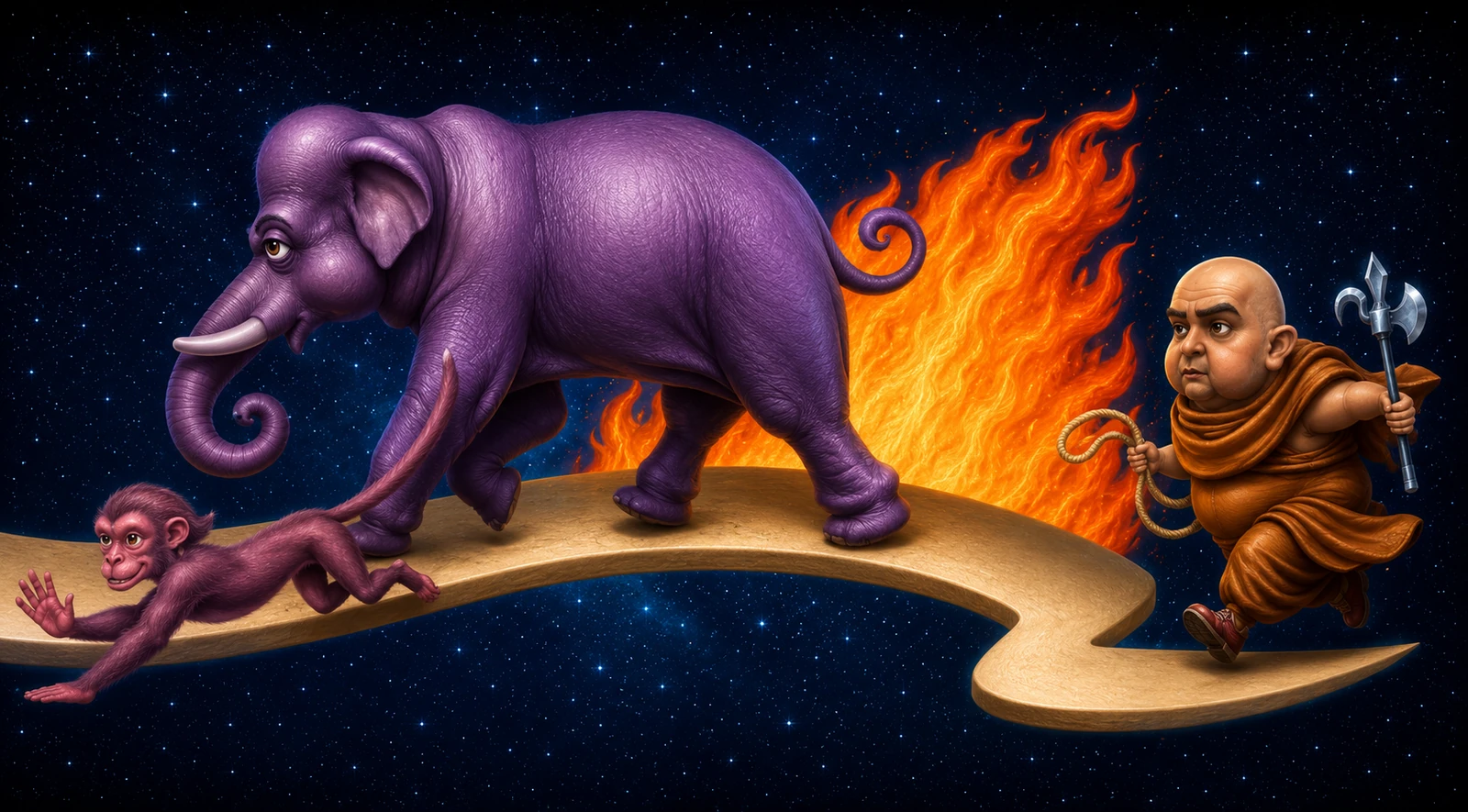
Монах олицетворяет наблюдателя, а также собранность и решимость практиковать, слон — ум, его черный цвет — притупленность ума (вялость, сонливость и неосознанность). Обезьяна — это возбужденность, черный цвет — степень возбужденности и количество грубых отвлечений (белый цвет — тонкая возбужденность, на данной стадии из-за обилия грубых отвлечений, тонкие еще не замечаются, поэтому обезьяна полностью черная). То, что обезьяна бежит впереди, ведя остальных за собой, значит, что ум очень возбужден и склонен отвлекаться.
Большое расстояние между монахом и животными символизирует трудности в обуздании ума. Чтобы укротить слона монаху надо сначала его догнать, но за таким буйным умом разве угонишься? С каждой стадией медитации расстояние постепенно уменьшается. На первой стадии перед монахом первый изгиб пути — это сила слушания, то есть благодаря полученным инструкциям монах может начать практику медитации (поскольку в древности не было книг о медитации, люди могли получить знания, только услышав от учителя).
Эта стадия называется установлением ума или установкой потому что на ней практик осознает состояние своего ума. Некоторых это пугает: они вдруг осознают, что совершенно не могут контролировать всю эту неразбериху, которая, как оказывается, царит в их уме постоянно. По той же причине некоторым кажется, что медитация их не успокаивает, а наоборот, делает более возбужденными. На самом деле они просто обнаруживают свою возбужденность, а это хороший знак, свидетельствующий о начале пути. На данном этапе главное не испугаться слишком сильно, а начать продвигаться в практике.
С 1 по 6 стадии изображено пламя, оно символизирует усердие. Его разная величина указывает на разную степень усердия. На первых стадиях усердия очень много, но чем дальше тем меньше его надо, чтобы устранить возбужденность и притупленность.
На первой стадии продолжительность времени за которое ум сохраняет ясность и не отвлекается, длится не больше минуты. На данном этапе слон ума и обезьяна возбужденности неукрощенные и полностью черные. Как сделать черное белым? Для этого нужны два инструмента, на картинке их держит монах:
Лассо (веревка) — памятование (вичара), то есть наблюдение явлений ума, способность замечать, что ум отвлекся. Возьмите слона своего ума и привяжите его веревкой памятования к колонне объекта медитации.
Анкуш (стрекало) — бдительность (витарка), то есть возвращение ума к объекту медитации, если он отвлекся. Если слон ума сбежал, верните его обратно стрекалом бдительности.
Монах должен набросить на слона ума лассо памятования и стрекалом бдительности возвращать его на выбранный путь, но на первой стадии это не получается. Когда человек только начинает практиковать медитацию он не сразу замечает, что ум отвлекся. Тут главное не допускать негативных эмоций, нельзя злиться или раздражаться из-за этого, а спокойно и методично возвращать ум к объекту медитации. Так, словно ум — это маленький ребенок, который сбежал с песочницы. Сколько бы он не сбегал, надо каждый раз терпеливо брать его за руку и возвращать в песочницу. Благодаря этому он будет убегать все реже и реже пока не станет полностью послушным.
Блуждание ума — это видоизменения объекта концентрации, например, он может становиться большим, а потом маленьким, менять цвет или превращаться из одной формы в другую. От данной помехи следует избавляться. А возбужденность — это отвлечение ума с объекта концентрации на другие мысли. Грубая возбужденность — это когда в случае отвлечения объект теряется, а тонкая — когда объект присутствует постоянно, даже во время отвлечений.
Если вы садитесь медитировать, но при этом шевелитесь, позволяете уму блуждать или отвлекаться, не возвращаете ум к объекту медитации в случае отвлечения — это не медитация, а просиживание штанов, в этом нет смысла. Следует стремиться не к тому, чтобы сидеть в медитации как можно дольше, а к тому, чтобы удерживать ум на объекте как можно дольше.
Поначалу, когда вы медитируете, кажется, что прошло много времени, но после взгляда на часы оказывается — мало. Значит концентрация была плохая. По мере развития способности концентрироваться все будет становиться наоборот: по ощущениям — просидели очень мало, но когда проверите, увидите, что прошло намного больше времени.
The monk represents the observer, as well as composure and determination to practise. The elephant represents the mind, and its black colour represents mental dullness (lethargy, drowsiness, and lack of awareness). The monkey represents agitation, while its black colour indicates the degree of agitation and the number of gross distractions (white represents subtle agitation; at this stage, because of the abundance of gross distractions, subtle ones are not yet noticed, so the monkey is entirely black). The fact that the monkey runs ahead, leading the others, means that the mind is highly agitated and inclined to become distracted.
The great distance between the monk and the animals symbolises the difficulty of taming the mind. To tame the elephant, the monk must first catch up with it, but how can one catch such a wild mind? With each stage of meditation, the distance gradually decreases. At the first stage, the first bend in the path lies before the monk — this is the power of listening. In other words, thanks to the instructions he has received, the monk can begin the practice of meditation (since in ancient times there were no books about meditation, people could acquire knowledge only by hearing it from a teacher).
This stage is called placing the mind because at this stage the practitioner becomes aware of the state of their mind. This frightens some people: they suddenly realise that they are completely unable to control all the confusion that, as it turns out, constantly reigns in their mind. For the same reason, some people feel that meditation does not calm them but, on the contrary, makes them more agitated. In reality, they are simply discovering their agitation, and this is a good sign that indicates the beginning of the path. At this stage, the main thing is not to become too frightened, but to begin progressing in the practice.
From stages 1 to 6, a flame is depicted, symbolising diligence. Its varying size indicates different degrees of diligence. In the early stages, a great deal of diligence is required, but as practice progresses, less and less is needed to eliminate agitation and dullness.
At the first stage, the period during which the mind remains clear and undistracted lasts no longer than a minute. At this stage, the elephant of the mind and the monkey of agitation are untamed and completely black. How can black be made white? Two tools are needed for this, and the monk is shown holding them in the image:
Lasso (rope) — mindfulness (vichara), that is, observation of the phenomena of the mind and the ability to notice that the mind has become distracted. Take the elephant of your mind and tie it with the rope of mindfulness to the pillar of the meditation object.
Elephant goad — vigilance (vitarka), that is, returning the mind to the meditation object when it becomes distracted. If the elephant of the mind has escaped, bring it back with the goad of vigilance.
The monk must cast the lasso of mindfulness over the elephant of the mind and use the goad of vigilance to return it to the chosen path, but at the first stage he is unable to do this. When a person first begins practising meditation, they do not immediately notice that the mind has become distracted. The main thing here is not to allow negative emotions to arise. One must not become angry or irritated because of this, but calmly and methodically return the mind to the meditation object. It is as though the mind were a small child who had run away from the sandbox. No matter how many times the child runs away, one must patiently take them by the hand each time and bring them back to the sandbox. As a result, the child will run away less and less often until becoming completely obedient.
Wandering of the mind consists of changes in the object of concentration. For example, it may become large and then small, change colour, or transform from one shape into another. This obstacle should be eliminated. Agitation, however, is the distraction of the mind from the object of concentration towards other thoughts. Gross agitation occurs when the object is lost during distraction, while subtle agitation occurs when the object remains present continuously, even while distractions arise.
If you sit down to meditate but continue moving, allow the mind to wander or become distracted, and do not return it to the meditation object when distraction occurs, this is not meditation but simply wasting time; there is no point in it. One should strive not to sit in meditation for as long as possible, but to keep the mind on the object for as long as possible.
At first, while meditating, it seems that a great deal of time has passed, but after looking at the clock, it turns out that very little time has passed. This means that concentration was poor. As the ability to concentrate develops, the opposite will gradually occur: it will feel as though you have sat for only a short time, but when you check, you will see that much more time has passed.